GenAI Content Pipeline
Training content written, produced, localised and delivered fast.
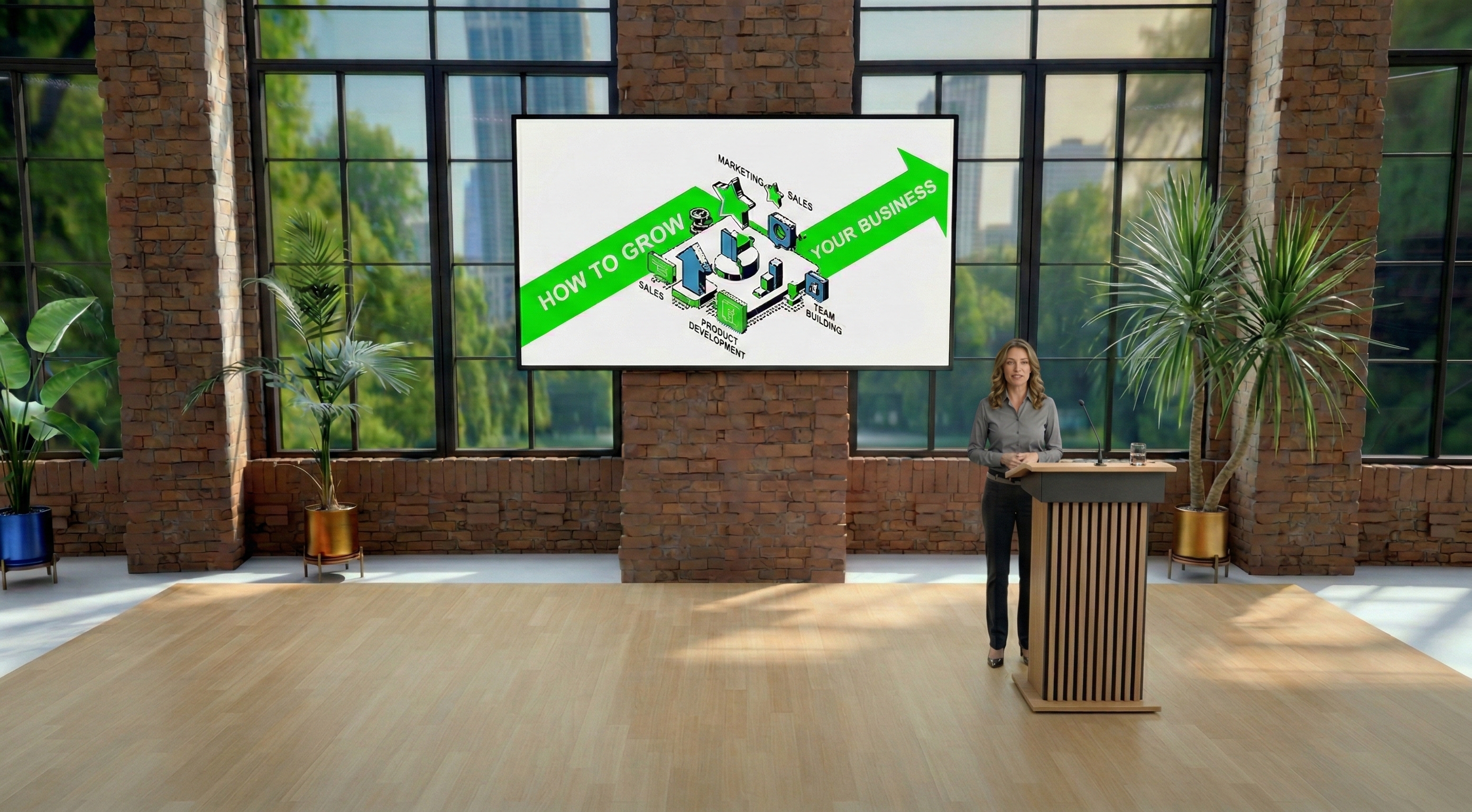
Twenty-eight hours of training, in twelve languages, at rollout speed.
How we rebuilt the production pipeline so a global franchise network could all start on the same day.
The Challenge
Our client, one of the world's largest restaurant businesses, was rolling out a new approach to revenue growth management across its global franchise network.
Pricing architecture, margin thinking, commercial discipline. The kind of change that only works if the people applying it in each market understand the reasoning, not just the rules.
The content was rigorous, detailed and long. Seven modules, twenty-eight hours of it, dense with commercial theory.
Then multiply that by twelve languages.
Traditional production maths doesn't survive that. Script, storyboard, design, animate, record, edit, review, and then repeat the back half of the process for every additional market.
Against a rollout date that isn't moving, the choice usually becomes cutting content, cutting languages, or staggering markets so some franchisees wait months for information their competitors already have.
None of those were acceptable answers.
How we Approached it
We changed the production pipeline rather than the process wrapped around it.
AI where it repeats, people where it counts.
We embedded a generative AI content pipeline alongside traditional editing and graphic design. The AI absorbed the volume work, the repetition and the variation across language versions. Editors and designers kept control of the things that determine whether learning actually lands: pacing, visual clarity, tone, judgement.
This isn't AI replacing a production team. It's a production team that stopped spending its hours on the parts of the job that were never creative.
Formularise ruthlessly.
We built the modules to a rigid, repeatable structure. That felt restrictive on module one and paid for itself by module three, because a predictable format means language versions can run in parallel rather than in sequence.
Consistency isn't just a quality benefit here. It's what makes the schedule possible.
Treat the script as the spine.
In narrated learning, the script, the on-screen graphics and the voice-over are one artefact, not three handoffs. Where they drift apart (different wording, different ordering, a different number of items on screen than in the audio) learners notice, and the credibility of the module drops. Across twelve languages, that discipline has to be structural rather than a final check.
Design for the drop-off.
Twenty-eight hours is a serious ask of anyone. We structured each module in shorter defined sections with visible progress, and built motion graphics that carried the pricing concepts visually rather than leaving narrated slides to do the work alone.
What we Delivered
A complete video-based learning programme covering the client's global revenue growth management approach:
Seven modules totalling twenty-eight hours of training content
Full localisation into twelve languages
Custom motion graphics illustrating pricing and commercial concepts
Professional narration aligned to on-screen content in every language version
A repeatable production format built for parallel language delivery
Technical QA and packaging for the client's global learning platform
The Outcome
The full programme was delivered and deployed across the client's markets. Every market received the same content, at the same standard, in its own language, in time for the rollout.
No cut modules, no staggered markets, no franchisees working from a translated summary while others had the real thing.
The production format also outlived the project. Because the structure was built to repeat, subsequent work for the client moved considerably faster, using a pattern that was already proven.
What we Took from it
The interesting thing about AI in content production isn't speed on any single asset. It's what happens to the economics of repetition.
Localisation has always been the point where ambitious global programmes get quietly reduced.
Twelve languages becomes four, then the rest get subtitles. When the cost of producing the twelfth version stops being twelve times the cost of the first, that trade-off disappears, and a global rollout can genuinely be global.
That shift is available to most organisations running multi-market communication. Very few have restructured their production to take it.
Get in touch
Start with a two-week prototype. Scale what works.
Tell us a real problem worth solving. We will frame it, build something you can demo to leadership, then make an informed call on what to scale.