Virtual Lab Tour
An always-on virtual lung oncology diagnostics lab for HCP best practice.
Winning
PMEA Award - Excellence in Innovation · 2023
The Challenge
Molecular testing is how targetable biomarkers get identified in advanced non-small-cell lung cancer. It's the step that determines whether a patient is a candidate for targeted treatment. Worldwide, fewer than half of eligible patients receive it, and part of the reason is gaps in physician understanding of the testing itself.
The established way to close that gap was the in-person preceptorship. Clinicians travel to a laboratory centre of excellence, spend time in the lab, and see the methodologies and equipment first hand. It works. It's also capped by the number of people a working laboratory can physically accommodate, and by whether a busy clinician can justify the travel.
In one market, over the course of a year, a traditional preceptorship reached six people.
Pfizer needed the education to reach a global specialist audience. The model they had could not get there by being run more often.
How we Approached it
We worked alongside a healthcare communications partner on this, and the starting position was that the format itself was the constraint. Improving the preceptorship wasn't going to produce a step change in reach. Replacing what it did was.
Recreate the place, not the presentation.
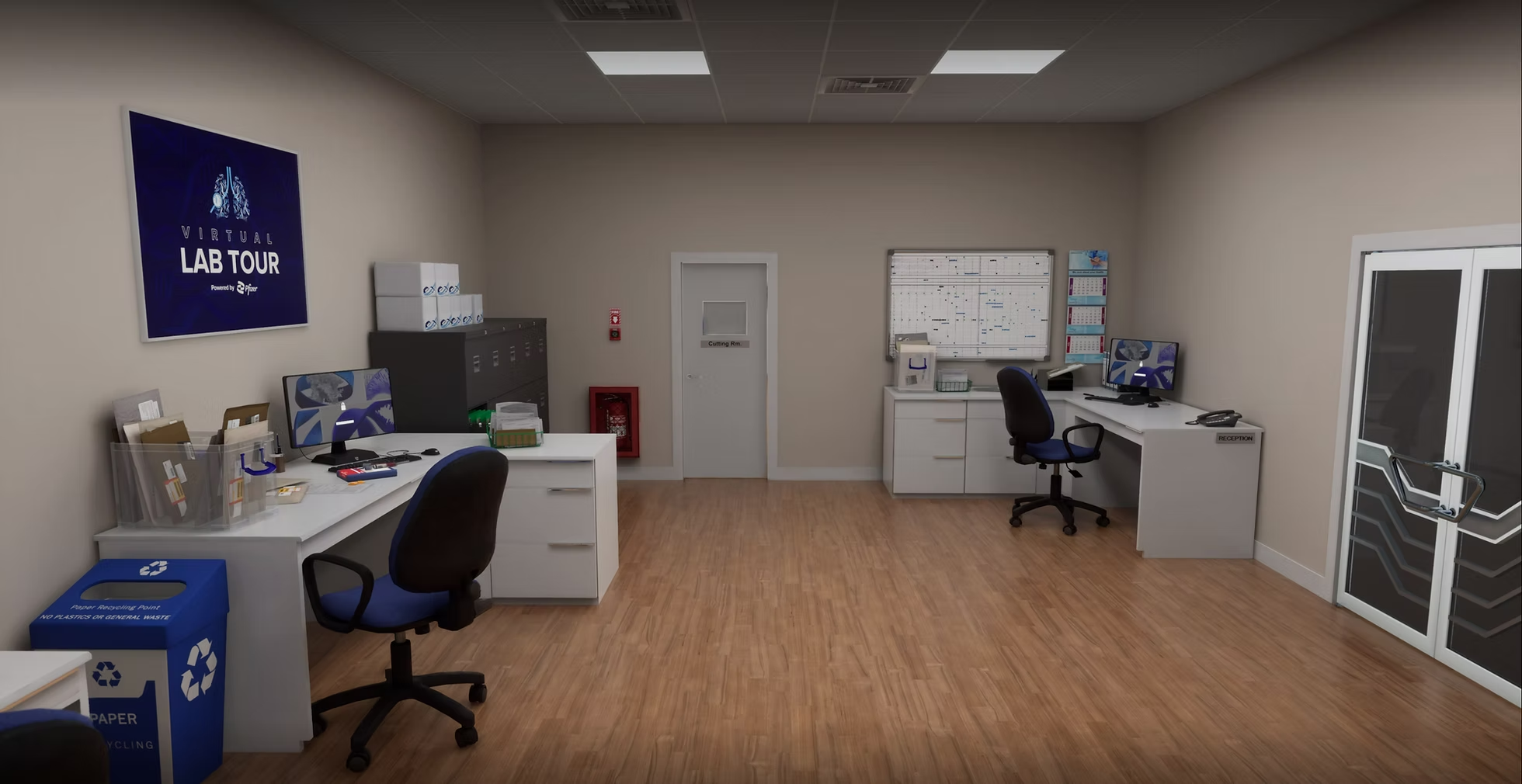
The learning here is spatial and procedural. It's about equipment, sequence, workflow and what a result looks like when you're standing in front of it. That doesn't survive being flattened into slides. We built an immersive online environment modelled on real centres of excellence, so clinicians move through a laboratory rather than read about one.
Clinical credibility before anything else.
A specialist audience disengages instantly from an environment that's approximately right. The lab was designed and developed with a think tank of pathologists and oncologists, covering methodologies, equipment, processes and the interpretation of results. In clinical education, accuracy isn't a compliance step at the end. It's the thing that determines whether anyone takes the experience seriously in the first minute.
Prove the learning, not just the visit.
We built in a self-assessment quiz, so knowledge improvement could be measured rather than assumed, and instrumented the platform for views, unique visitors and time on site.
Design for markets from day one.
A global gap needs local delivery. The environment was structured so Pfizer country teams could localise and roll out in their own languages rather than commission their own versions.
What we Delivered
A complete immersive learning environment, deployed and rolled out across markets:
An online virtual diagnostics laboratory modelled on real centres of excellence
Learning content covering molecular testing methodology, equipment, process and result interpretation in NSCLC
Clinical design developed with an advisory group of pathologists and oncologists
A user self-assessment quiz for knowledge measurement
Engagement analytics across views, unique visitors and time on site
A localisation framework supporting country-level rollout in multiple languages
The Outcome
In its first market, across the ten months following launch, the virtual lab recorded 1,256 unique visitors and 2,271 total visits, with an average of six minutes spent per visit. Against the six clinicians reached by traditional preceptorship in the same period, that is a two hundred fold increase in reach.
It had launched in two countries and two languages by the first reporting point, with four further markets in planning.
The response from specialists was the part that mattered most:
"The biggest interest comes from anatomo-pathologists and pneumologists. They are enthusiastic and find the tool interesting, useful and easy to use. The evaluation test is well appreciated."
Pfizer Belgium
The team also reported clinicians adopting it beyond its original purpose, using it as a teaching resource in meetings and training for students, pneumology assistants and junior pneumologists.
What we Took From it
When a model's limit is physical, optimising it is the wrong instinct. A preceptorship programme run twice as often reaches twelve people instead of six. The problem was never efficiency.
The interesting constraint in this work wasn't technical. It was credibility at scale. Removing the room removes the ceiling on numbers, but it also removes the authority the room conferred, and that has to be rebuilt deliberately through clinical rigour, accurate environments and the involvement of the specialists the audience already trusts. Get that wrong and you have reach without attention, which is worth nothing at all.
Get in touch
Start with a two-week prototype. Scale what works.
Tell us a real problem worth solving. We will frame it, build something you can demo to leadership, then make an informed call on what to scale.